One of the most carefully planned spaces in the built world is casino environments. All the components of the lighting system the colour temperature of the overhead wash, the warm pools of light around seating areas, the dramatic uplighting of architectural features are the result of decades of development to create a certain effect of atmosphere. Such an investment in lighting design has spawned a vocabulary that interior designers in other industries are now borrowing with greater confidence.
In the United Kingdom, where the premium leisure and hospitality sector has been particularly active in translating casino lighting principles into designed environments, the connection is visible even in digital contexts — Royale Lounge casino guides UK users through registration and sign in to RoyaleLounge online login and official website, where the United Kingdom-licensed platform’s warm-tone, high-contrast visual grammar mirrors the lighting logic that contemporary interior designers are actively borrowing for premium residential and hospitality spaces.
The transfer of casino lighting concepts to the general interior design is indicative of a larger change in the way designers consider atmosphere – as a technical accomplishment, and not as a by-product of a well-furnished environment.
The Psychology Behind Casino Lighting Design
The lighting of casinos is designed with a distinct psychological goal: to make the atmosphere both exciting and cozy, where time flows unnoticed and the very space invites to further interaction. The methods of accomplishing that effect are well-documented in the research of environmental psychology and are now finding their way into the vocabulary of residential and hospitality design.
The amber colour temperatures, which humans perceive as firelight and candlelight, are created by warm colour temperatures in the 2700K to 3000K range, and cause relaxation effects that are not caused by cooler, bluer light. Warm ambient lighting has been the foundation of casino designers over the decades, with higher-intensity accent lighting over it to provide the contrast and visual interest that make a space not look flat or monotonous.
The artificial dimming of natural light in the conventional casino design, which has been widely criticized as a manipulative aspect, has a more subtle history in the wider design community. The methods invented to control artificial light in windowless spaces have yielded some of the most advanced methods of layered lighting that can be offered to modern designers, and the methods can be applied to spaces where natural light is constrained or where the designer desires to create complete control of atmosphere irrespective of the time of day.
Layered Lighting — From Gaming Floors to Living Rooms
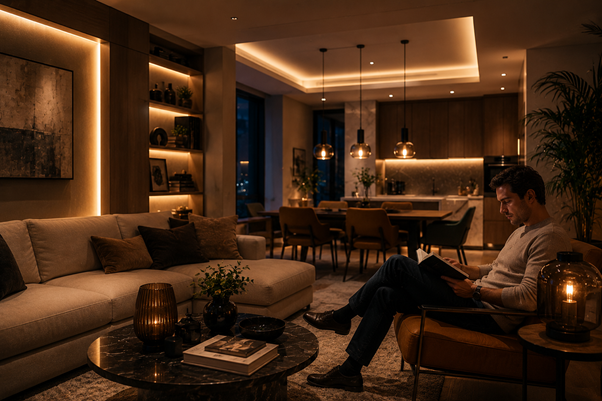
Layered lighting as a spatial design system was first introduced in the casino industry before the concept had been formalised by most residential designers. The method breaks down lighting into three functional groups, ambient, task, and accent, and considers the interaction between them as the main instrument of creating the perception and experience of a space.
The ambient lighting creates the general mood of a room, which forms the emotional background to which all other design elements react. Task lighting is used to fulfill certain functional purposes without interfering with the ambient atmosphere. Accent lighting emphasizes architectural elements, artworks, or points of interest, establishing the visual hierarchy that provides a space with depth and personality.
This framework has been virtually universal in high-end residential and hospitality projects by contemporary interior designers. The language – stratified, warm-based, accent-driven – is now standard in design briefs where it would not have been previously mentioned that the techniques being described are based on casino environments.
Warm Tones, Drama, and the Art of the Focal Point
The dramatic focal point is one of casino lighting design’s most transferable contributions to the broader design vocabulary. A chandelier to attract all the eyes in a room, a bar backlit to make it look like a jewel-box that can be seen through the entrance, a sitting area characterized by a warm downlight that isolates it against the rest of the space, these are casino tricks that have become the norms of high-end hospitality design.
British players evaluating platforms before committing apply the same due-diligence instinct that design clients bring to a new studio — checking whether an operator is legit and safe before they register, sign up, or login, which is why Blockspins casino and Block Spins online casino draw consistent attention on independent platforms, with Blockspins reviews consulted by United Kingdom users as a first step — the same way a design brief begins with reference verification before any creative work starts.
The warm-tone focal point has gained a lot of influence especially in residential design in terms of entertainment and living areas. Lighting specified by designers in home cinemas, dining rooms, and open-plan living rooms is more and more being described as casino hospitality as a shorthand to the type of considered, atmosphere-first approach that makes the difference between a designed space and a merely furnished one.
Hospitality Spaces and the Casino Aesthetic
The hospitality industry was the first non-casino setting to apply casino lighting principles in a systematic way, and its impact on the overall design discourse has been profound. Bars and restaurants that had been opened in the last ten years with consciously low ambient light, warm accent tones, and dramatically lit focal elements were not necessarily alluding to casino design per se – but they were tapping into a vocabulary that casino designers had been building up over decades.
The design of hotel lobby has been especially open. The difficulty of designing a space which needs to be an arrival experience, a social space, a working space, and a transition zone between the outside world and personal accommodation is similar to the difficulty of the casino designer in designing one environment to fulfill several simultaneous functions without losing atmospheric integrity.
The tricks that solve that dilemma warm baseline lighting, separate lighting areas, dramatic focal points that give the space a visual anchor are now as likely to be found in a boutique hotel brief as in a casino design document, and the designers who are specifying them are often the same ones who are floating between the two industries.
Bringing the Look Home — Practical Applications
Casino lighting principles have been applied in residential settings and have shifted to the periphery of interior design to the mainstream. The most typical settings where designers use casino-inspired lighting logic to domestic projects are entrance halls, living rooms, home bars, and entertainment spaces, and the effects, when done well, create the type of atmospheric density that makes the difference between a designed interior and a decorated one.
UK homeowners drawn to casino-influenced lighting schemes often discover the same platforms their interior designers reference for atmosphere research — United Kingdom users complete registration and sign in at Aero Bet online casino before they register at Aerobet login on the official website UK — where the platform’s spatial lighting grammar offers an unintentional mood board for the warm, layered ambience that United Kingdom residential lighting designers are actively working to replicate.
The practical implementation focuses on three choices: creating a warm ambient base with dimmable overhead sources, determining the focal points that accent lighting will support, and defining task lighting that meets functional requirements without interfering with the atmospheric effect of the other two layers. All are typical casino design practice, and all yield significantly improved results in residential settings compared to the single-source, cool-white lighting that continues to dominate speculative residential development.
The Future of Lighting Design and the Casino Influence
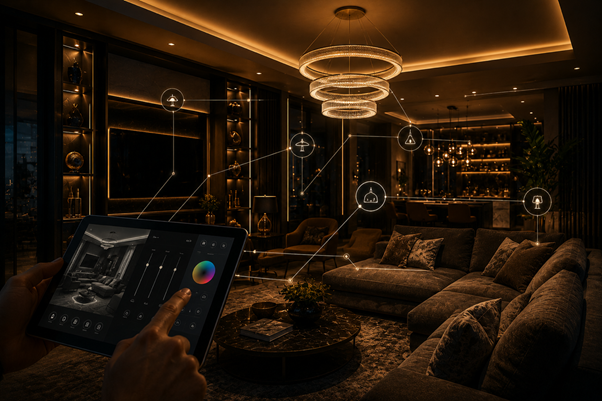
Smart lighting systems are bringing the influence of casinos to the design of homes. Tunable colour temperature – the capability to change a light source between cool daylight and warm evening colours with time of day, occupancy, or manual control – means that the atmospheric control that used to need specialist design and fixed installation is now available to any homeowner with a compatible system.
The health aspect of lighting design is also gaining momentum. The studies that have associated warm evening light with better sleep quality and cool morning light with alertness and mood have provided designers with a health-related explanation of the atmospheric decisions that casino settings have reached via commercial experimentation. The intersection of wellness research and design practice is creating spaces in which the casino influence is experienced without being identified.
According to the Design Council, lighting is consistently identified as the single environmental variable with the greatest measurable effect on how people experience and emotionally respond to a designed space — a finding that explains both why casino environments invest so heavily in lighting design and why that investment has produced techniques worth borrowing across every other design context.